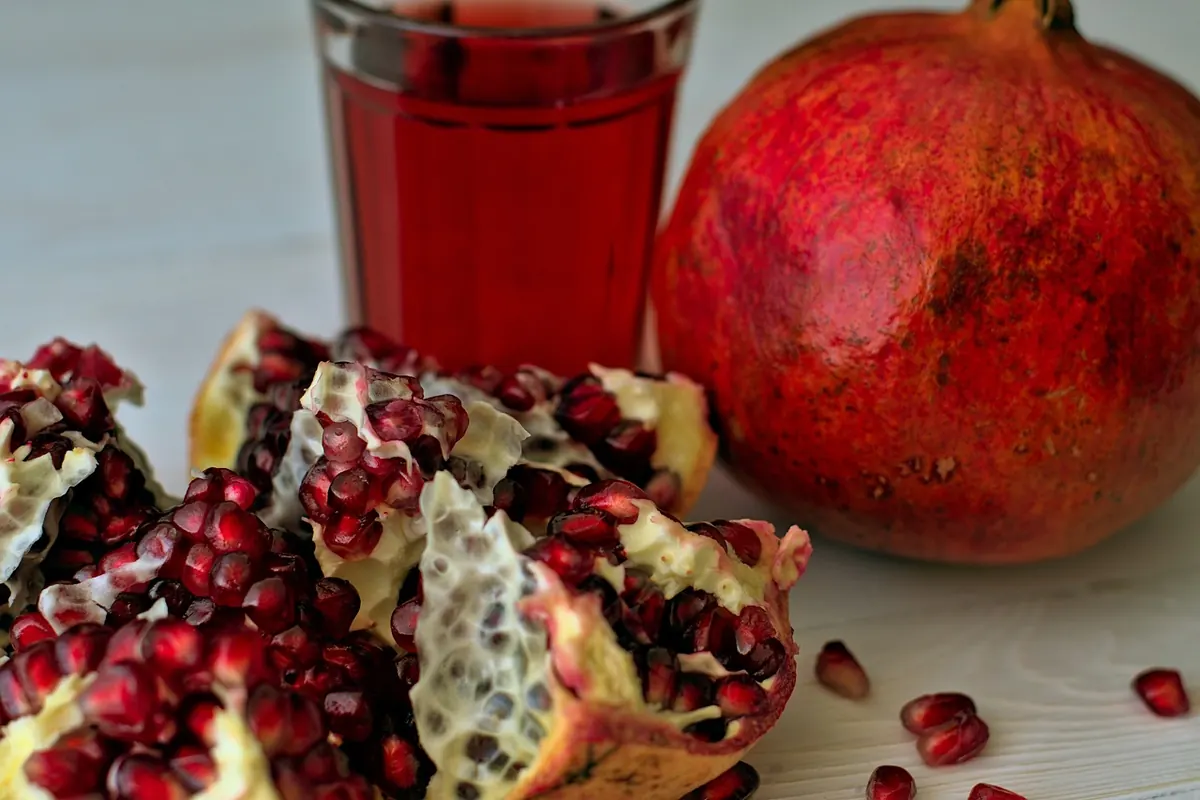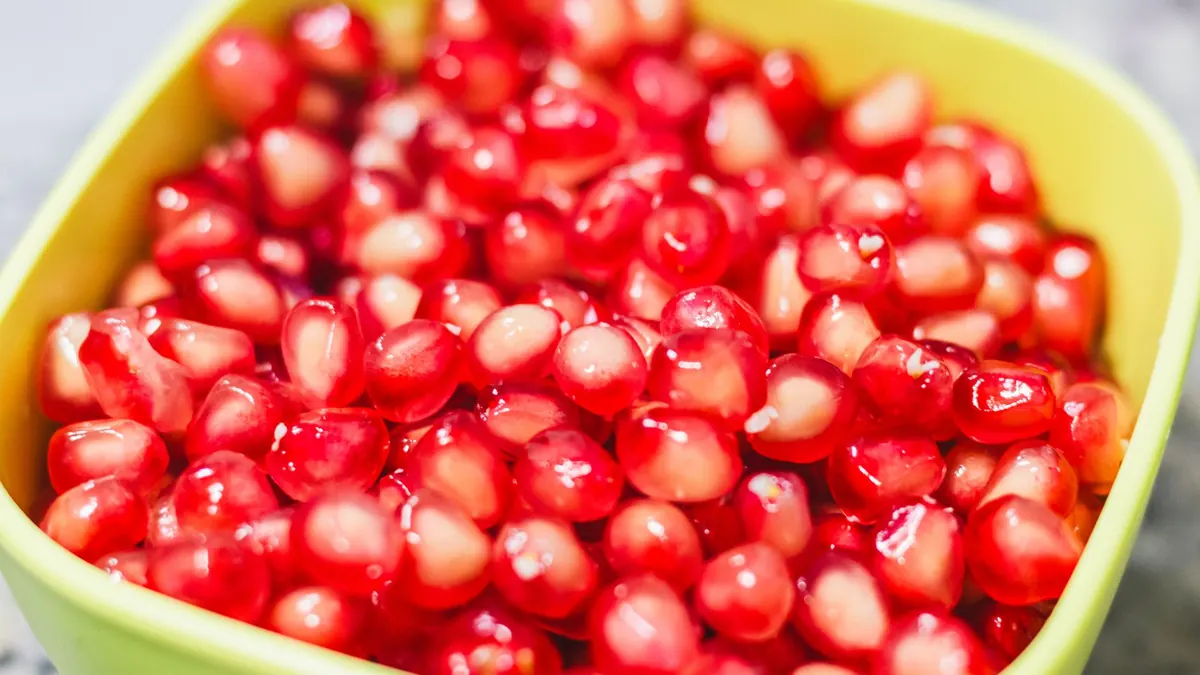
In late June, a pomegranate hedge does something a clipped privet never will: it opens a few hundred orange-red flowers, each one a small papery trumpet, and the whole row hums with bees. By October those flowers have become fruit, heavy enough to pull the branches into a lazy arch. Between those two moments you get coppery new growth, glossy summer leaves and a yellow autumn finish. It is a hedge that works for a living.
The catch, and there is always one, is that pomegranates are not a plug-and-play substitute for box or laurel. They are deciduous, they sucker, and they fruit best where summers are hot. Design around those facts and you get a boundary planting that needs a fraction of the attention of a formal hedge, and pays you back in fruit.
Why Pomegranates Suit a Hedge Better Than You Might Expect
A pomegranate wants to be a multi-stemmed shrub. Left alone, it produces a thicket of stems from the base, dense right down to the soil, which is exactly the growth habit a hedge needs. Plants typically settle somewhere between two and four metres tall in a garden setting, so a row can be kept at eye level with modest pruning rather than a yearly battle.
They are also forgiving about soil and water. Once established, a pomegranate will tolerate dry summers, rocky ground and alkaline conditions that make other fruiting plants sulk. Pests are few, and the plant's habit of regrowing from the base means a hard winter rarely kills it outright.
Be honest about the winter gap, though. From late November to March the hedge is bare stems, so if year-round screening is the whole point, plan a mixed boundary: an evergreen backdrop of olive, holly or bay with the pomegranates in front. You get privacy in January and pomegranates in July.
Site and Variety: Getting These Two Right Saves Years
Full sun is not optional if you want fruit. Aim for six hours or more, ideally on a south- or west-facing boundary that catches reflected warmth from a wall or paving. Plants in part shade will grow and flower thinly, and the fruit they do set may not ripen before the cold arrives.
Drainage matters more than richness. Pomegranates dislike sitting in wet soil over winter, so on heavy clay, plant on a slight mound or a raised strip and mix in grit and compost. A sheltered spot away from cold winter wind helps, especially in marginal climates.
On varieties, buy from a nursery that states hardiness for your area rather than guessing. A few reliable names to look for:
- Wonderful — the standard commercial variety, large deep-red fruit, widely available.
- Eversweet — softer seeds and a sweeter, milder flavour; often recommended for cooler coastal gardens.
- Parfianka — soft-seeded, aromatic, good for eating fresh.
- Salavatski and Kazake — cold-hardy types worth seeking out where winters bite.
- Nana — a dwarf ornamental with small fruit; useful for tight spaces, but not a cropping plant.
Spacing and Planting the Row
For a dense hedge, set plants about 90 cm to 1.2 m apart; they will knit together in two to three seasons. If you are buying larger, more expensive plants and can wait, 1.5 to 1.8 m spacing gives each shrub room to develop its own shape. In a wide boundary, two staggered rows about 60 cm apart make a thicker screen and a better windbreak.
Keep the row at least 60 to 90 cm from a fence or wall so you can reach the back for pruning and so air moves through the plants. Boundary rules vary by municipality, so check local regulations before you dig rather than after.
- Clear a strip about a metre wide and strip the grass — pomegranates compete badly with established turf.
- Fork over the ground and add a few centimetres of compost; on clay, mound the row up by 15 cm.
- Plant at the same depth the plants were growing in their pots, firming the soil well.
- Water each plant thoroughly, then mulch with 5 to 8 cm of bark or straw, keeping it clear of the stems.
- Water weekly through the first summer; after that, deep soakings every two to three weeks in dry spells are enough.
Pruning for Shape, Fruit and Privacy
The first three years
Resist the urge to let a young hedge fruit. For the first two seasons, pick off the flowers as they fade so the plant puts energy into roots and stems. Choose five to seven strong stems per plant, spaced around the crown, and remove the rest at the base. Tip back the chosen stems in late winter to a outward-facing bud to encourage branching low down — that is what fills the hedge to ground level.
The annual winter routine
Prune in late winter, while the plant is dormant and the framework is visible. Work through each plant in the same order: dead and damaged wood first, then anything crossing or rubbing, then suckers crowding the base, then a light thin of the interior so light reaches the middle. Finally, tidy the face of the hedge with secateurs, cutting back to a side shoot rather than shearing.
Do not run a hedge trimmer along a pomegranate. It cuts through the two- and three-year-old wood that carries most of the flowers, and you will get a dense green box with almost no fruit. Hand cutting takes an afternoon for a ten-metre row and is the difference between a hedge and a crop.
In summer, limit yourself to pinching out water sprouts and any shoot that is lunging into a path. Heavy summer pruning removes the growth the fruit is sitting on.
A pomegranate hedge rewards the gardener who cuts little and often, and punishes the one who waits three years and then attacks it with a saw.
Seasonal Interest, Month by Month
Spring brings coppery-red new leaves that glow against everything around them. Early summer is the flowering season, and it lasts for weeks rather than days, with successive flushes of bloom. Late summer shows the fruit swelling and colouring; if skins split, that is usually uneven watering rather than disease, so steady the hose routine. Autumn turns the leaves butter yellow before they drop. Winter leaves you with angular, reddish-brown stems that look deliberate in a mixed border.
If you want the hedge to work as a screen in every month, underplant or back it with something evergreen and let the pomegranates provide the seasonal layer in front.
Keeping Maintenance Genuinely Low
The main jobs are water, mulch and suckers. Water deeply and less often rather than little and often — shallow watering encourages weak roots and more suckering. Top up mulch each spring. Go easy on nitrogen fertiliser; too much gives you leaves and no flowers, so a light dressing of compost is usually all that is needed.
Pomegranates throw suckers from the root zone, which is fine in a hedge — it thickens the base — but a nuisance in a lawn. Mow a clean strip along the row, or sink a root barrier if the hedge borders a bed. Watch for aphids on soft new growth in spring and knock them back with a strong jet of water before reaching for anything stronger. In regions with fruit fly, bagging or netting the fruit is more effective than spraying.
Start With a Short Row
If you are unsure, plant five or six pomegranates along one boundary and live with them for a season before committing to the whole garden. Buy in autumn or early spring, when nurseries have the widest choice and the plants settle quickly. Give them water through the first summer, keep the base clear, and prune in the second winter. Expect a real hedge by year three and a proper crop by year four — which is, by hedge standards, remarkably quick.
Photo: manfredrichter / Pixabay